

INTRODUCTION
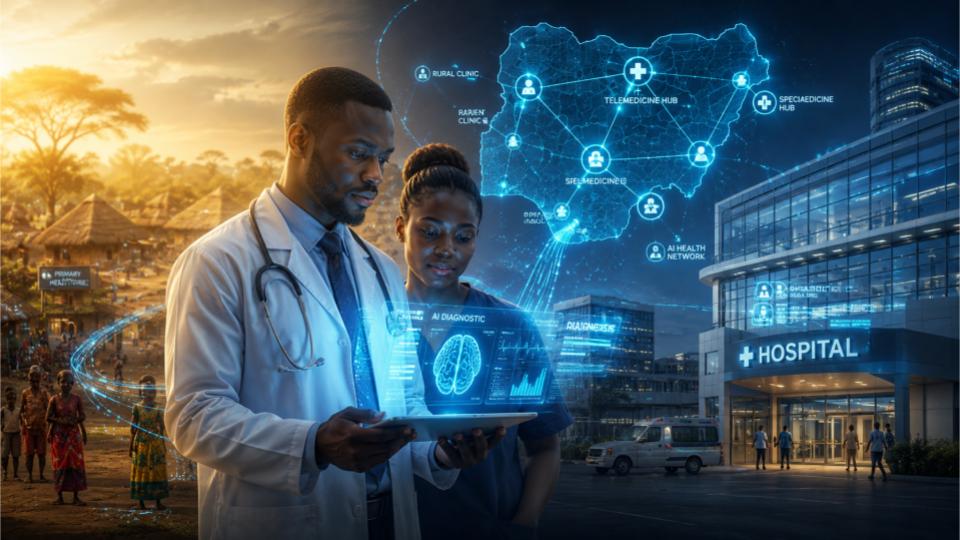
This is a detailed, honest look at how AI is being applied to Nigeria’s healthcare system in 2026, why it matters so urgently, what is actually working versus what remains aspirational, the real challenges holding progress back, the jobs and career opportunities opening up for Nigerians, and what the future looks like for patients and health professionals in this country.
The Healthcare Crisis That Made AI Necessary
My mother spent eleven hours on a hard wooden bench at a Lagos University Teaching Hospital in 2021 waiting for a doctor to review her test results. She was not a complicated case. She did not require surgery or specialist intervention. She had a urinary tract infection that any trained clinician could diagnose in under ten minutes with the right tools. But the doctor covering her ward was simultaneously managing forty six other patients, and there simply was not enough of him to go around. When she finally got her results reviewed, the prescription took three minutes. The eleven hours before it were the cost of a system stretched past its breaking point.
That story is not unusual. It is the everyday experience of millions of Nigerians who interact with the public health system, and it captures the core problem more honestly than any statistical report can. Nigeria has a healthcare system that is structurally undersized for its population, underfunded relative to its needs, and geographically distributed in ways that leave the majority of the country with extremely limited access to basic medical care.
The numbers make this concrete. Nigeria has one doctor for approximately every 2,500 citizens. The World Health Organization recommends one doctor per 600 people. In rural states like Kebbi, Yobe, and Zamfara, that ratio is significantly worse. Roughly 70 percent of Nigerian doctors who graduated in the last decade have left the country, a brain drain so severe that it has a name now: the japa syndrome applied to healthcare. Meanwhile, the population keeps growing, the disease burden remains high, and the budget allocation for health consistently falls short of the 15 percent of GDP recommended by the Abuja Declaration that Nigeria signed in 2001.
Into this crisis, artificial intelligence is not arriving as a magic solution. Anyone who frames it that way is being irresponsible. But AI is arriving as a set of genuinely useful tools that can extend the reach of the too few doctors and nurses who remain, speed up diagnosis in settings where specialists are unavailable, improve how medicines and supplies are distributed, and connect patients in remote communities to care they would otherwise never receive. The gap between what is possible and what exists in Nigeria today is so large that even partial solutions matter enormously.
This is the honest context for every conversation about AI and healthcare in Nigeria. Not hype. Not dismissal. But a sober recognition that a country in a genuine health emergency has new tools available and the question worth asking is how to use them well.
Why AI in Healthcare Matters Uniquely in Nigeria
There is a tendency in global tech coverage to present AI in healthcare as primarily a story about wealthy countries with sophisticated hospitals and abundant data. Algorithms helping radiologists spot cancers faster in Boston. AI assistants helping GPs in London manage their workload. These stories are real, but they describe a context that is almost entirely different from what healthcare AI means in Nigeria.
In the Nigerian context, AI matters most not because it can help a well resourced system perform marginally better, but because it can help a severely under resourced system do things it currently cannot do at all. That distinction changes everything about why this technology is important here.
Consider a community health worker in Borno State who has completed a basic nursing certificate and covers seventeen villages across a radius of forty kilometers. She can take vital signs. She can give vaccinations. She can treat uncomplicated cases of malaria and diarrhea. But when she encounters a child with symptoms she does not recognize, she has no doctor to call, no specialist to refer to immediately, and no diagnostic equipment beyond a thermometer and a blood glucose reader. Her only options are to transport the child to a facility several hours away or make her best guess. An AI diagnostic support tool on her smartphone changes that equation entirely. It does not replace a doctor. But it gives her access to clinical reasoning she would not otherwise have.
Multiply that scenario across the thousands of community health workers, primary healthcare center nurses, and general practitioners working in underserved areas across Nigeria, and the case for AI in Nigerian healthcare becomes not just commercially interesting but genuinely urgent from a public health standpoint.
“In countries where the doctor is unavailable rather than just inconvenient, AI does not compete with human medical expertise. It extends it into spaces where it has never reached before. That is a fundamentally different kind of value proposition.”
The importance of this technology in Nigeria is also about equity in a way that goes beyond healthcare. When a child in Katsina can receive an accurate early diagnosis of tuberculosis through an AI powered chest scan tool at a local health post, when that diagnosis then triggers an automated treatment protocol that a community health worker can follow, that child has a chance at an outcome that was previously only available to children whose families could afford a private hospital in Lagos or Abuja. Healthcare AI in Nigeria is partly a story about democratizing medical competence across geographic and economic lines that have historically determined who lives and who dies.
Seven Ways AI Is Actively Being Applied to Nigerian Healthcare
Application One
AI Diagnostic Support for Understaffed Facilities
This is arguably the most immediately impactful application of AI in Nigerian healthcare. Diagnostic support tools use machine learning to analyze symptoms, patient history, and test results and suggest likely diagnoses to health workers who may not have specialist training. Platforms like Ubenwa, a Nigerian startup that uses AI to diagnose birth asphyxia through infant cry analysis, have demonstrated that this kind of tool can work effectively in low resource Nigerian settings. Ada Health and similar symptom checker platforms are being piloted by several Nigerian state health agencies for use in primary healthcare centers where physicians are absent.
The critical design requirement for these tools to work in Nigeria is that they must function with low connectivity, require minimal training for health workers to use, and be calibrated on disease patterns that are relevant to the Nigerian population rather than imported from Western clinical datasets where malaria, typhoid, and sickle cell disease are rare rather than common.
Application Two
Medical Imaging Analysis for Radiology and Pathology
Nigeria has a severe shortage of radiologists and pathologists. Many public hospitals operate CT scanners and X ray equipment that produce images which then sit unread for days or weeks because there is no specialist available to interpret them. AI imaging analysis tools can review chest X rays for signs of tuberculosis, pneumonia, and lung cancer, analyze retinal scans for diabetic eye disease, and flag abnormalities in pathology slides for follow up review by a human specialist.
Helium Health and Limi Hospital in Lagos have piloted AI imaging tools as part of their diagnostic workflows. The Gates Foundation has funded AI tuberculosis screening projects in Nigeria that use chest X ray analysis algorithms to accelerate detection in high burden communities. These projects are still limited in scale but they demonstrate that the technology is deployable in Nigerian conditions and that the clinical results are meaningful.
Application Three
Drug Supply Chain Management and Stock Out Prevention
One of the most consistently reported problems in Nigerian primary healthcare is essential medicine availability. Facilities run out of malaria drugs during peak transmission season. Vaccines expire in storage while other facilities face shortages. Antibiotics are unavailable at the point of need and overstocked three states away. This is not primarily a funding problem. It is a logistics and forecasting problem, exactly the kind of problem that AI and machine learning tools are designed to solve.
AI demand forecasting tools that analyze historical consumption data, disease seasonality, population patterns, and facility capacity can predict which drugs will be needed where and when, enabling procurement agencies to pre position supplies before shortages occur. Zipline, which operates drone delivery of medical supplies in several African countries, uses AI logistics planning to optimize its delivery routes. Discussions about expanding its Nigeria operations have been ongoing since 2023. The mSupply platform, used in several Nigerian states for inventory management, is being enhanced with machine learning features that flag predicted stock outs weeks before they happen.
Application Four
Telemedicine Platforms with AI Triage
The COVID pandemic accelerated telemedicine adoption in Nigeria dramatically. Platforms like Helium Health, Reliance HMO, and 54gene introduced virtual consultation features that connected patients to doctors via video and chat. What is emerging in 2026 is the next layer of this: AI powered triage systems that assess a patient’s symptoms before the consultation begins, direct them to the right level of care, and provide the consulting doctor with a pre consultation summary that saves time and improves diagnostic accuracy.
For Nigeria, the connectivity and device access constraints that limit telemedicine’s reach are real but narrowing. The expansion of affordable smartphones and the gradual improvement of mobile data coverage in secondary cities means that a telemedicine consultation that would have been impossible for someone in Ilorin or Calabar in 2019 is now a realistic option in 2026. AI triage layers that work on low bandwidth connections and can operate through USSD for patients without smartphones extend this access further into the populations that need it most.
Application Five
Disease Surveillance and Epidemic Early Warning
Nigeria’s public health authorities have experienced repeated failures to detect and contain outbreaks early. Lassa fever, cholera, meningitis, and most recently the lingering COVID challenges all demonstrated that the surveillance infrastructure for detecting disease clusters and triggering early responses is inadequate. AI epidemiological tools that aggregate data from hospital admissions, community health reports, social media signals, and environmental data can identify unusual patterns that signal an emerging outbreak days or weeks before it would otherwise be formally recognized.
The Nigeria Centre for Disease Control has been working with international partners to build AI enhanced surveillance capacity. Real time analysis of data from the country’s Integrated Disease Surveillance and Response system, combined with machine learning models trained on Nigerian outbreak history, creates an early warning capability that could meaningfully reduce the time between a disease cluster forming and a coordinated public health response beginning.
Application Six
Personalized Treatment for Chronic Disease Management
Nigeria carries one of the world’s highest burdens of sickle cell disease, with roughly 150,000 children born with the condition every year. Hypertension affects an estimated one third of Nigerian adults. Diabetes rates are rising rapidly with urbanization. These are chronic conditions that require long term management and regular clinical decision making, exactly the kind of ongoing care that the overstretched Nigerian health system struggles most to provide consistently.
AI tools that help patients manage their own chronic conditions, remind them to take medications, alert them when their tracked vital signs suggest a deterioration, and guide them on when to seek in person care reduce the demand on facilities for routine management while improving outcomes. For sickle cell patients specifically, AI tools that predict pain crisis risk based on weather, hydration, and activity data have shown promise in research settings and are being developed for Nigerian clinical use.
Application Seven
Hospital Operations and Administrative Efficiency
A substantial portion of the dysfunction in Nigerian public hospitals is not about clinical skill deficits but about administrative and operational failures. Patient records are lost. Appointment scheduling creates impossible congestion at certain hours while other times are underutilized. Operating theater schedules are inefficient. Laboratory results are misplaced or delayed. Bed management is manual and reactive.
Electronic health record systems with AI scheduling and workflow optimization tools are being implemented in several Nigerian tertiary hospitals. Helium Health’s hospital management platform serves hundreds of Nigerian health facilities. These tools do not require clinical AI at all. They require operational AI that can do what good management software does everywhere, automate routine administrative tasks, reduce errors, and generate data that managers can use to make better decisions. In a system where administrative chaos wastes enormous clinical capacity, this kind of mundane operational AI generates real patient benefit.
The most important insight about AI in Nigerian healthcare is this: you do not need AI to be perfect. You need it to be better than the alternative. In communities where the alternative is nothing, that bar is achievable with tools that exist today.
The Honest Challenges That Cannot Be Ignored
No honest account of AI in Nigerian healthcare can end with the applications without confronting the obstacles. These are not reasons to give up on the technology. They are problems that people working in this space must genuinely solve, and naming them clearly is the first step.
Real Barriers Facing AI Healthcare in Nigeria
The Jobs and Career Opportunities Opening Up for Nigerians
Here is the dimension of this story that rarely gets the attention it deserves. The growth of health technology in Nigeria is not only a patient care story. It is a significant and expanding source of employment, and a meaningful portion of those jobs are accessible to Nigerians who are willing to develop specific skills that are genuinely in short supply.
Health tech companies operating in Nigeria need people who understand both technology and the Nigerian health context. That combination is rarer than either skill alone, which means Nigerians who develop it are in a genuinely strong position in the job market. A software developer in Enugu who spends six months understanding how Nigerian primary healthcare centers operate, what their data challenges are, and how clinical workflows function has value to a health AI company that a purely technical developer based overseas cannot replicate.
| Role | Who Is Hiring | Monthly Salary Range | Remote Possible |
|---|---|---|---|
| Health Data Analyst | Health tech startups, NGOs, NCDC | ₦280,000 – ₦700,000 | Yes |
| Clinical Informatics Specialist | Teaching hospitals, HMOs, Helium Health | ₦350,000 – ₦900,000 | Hybrid |
| Software Developer (Health Systems) | Health tech startups, international NGOs | ₦450,000 – ₦1,400,000 | Yes |
| Telemedicine Coordinator | Telemedicine platforms, private hospitals | ₦120,000 – ₦320,000 | Hybrid |
| AI Model Trainer (Medical) | AI startups, research institutions | ₦300,000 – ₦800,000 | Yes |
| Health Tech Sales and Deployment Officer | Health IT companies, device distributors | ₦180,000 – ₦450,000 | No |
| Epidemiological Data Scientist | NCDC, WHO Nigeria, international NGOs | ₦400,000 – ₦1,100,000 | Partial |
| Digital Health Policy Analyst | Government agencies, think tanks, USAID | ₦350,000 – ₦850,000 | Yes |
Beyond formal employment, the health tech sector is creating entrepreneurial opportunities for Nigerians who identify gaps that existing platforms do not address. The specific disease burden of northern Nigeria, including high rates of maternal mortality, malnutrition, and meningitis, is different from the disease profile in Lagos, yet most Nigerian health tech products are designed with an urban southern Nigerian user in mind. Building AI health tools calibrated for northern Nigerian communities, in Hausa, Fulfulde, or Kanuri, for users who may have limited literacy but access to basic smartphones, represents an entire product category that is largely unbuilt.
Career Entry Point for 2026
If you are a nurse, pharmacist, community health extension worker, or any other health professional who wants to move into health technology, the fastest route is combining your clinical knowledge with one digital skill. Learn data analysis using Google’s free Data Analytics Certificate or the ALX Africa programme. Learn basic SQL to query health databases. Or learn how to use electronic health record systems at an administrator level. Clinical understanding combined with even basic digital skills is the exact profile that health tech companies in Nigeria are struggling to hire for right now.
What the Future Holds for Patients and Professionals
Forecasting the future of health technology in Nigeria requires both optimism about what is possible and realism about the pace of change in a complex system. The honest assessment for 2026 is that the technology is advancing faster than the infrastructure, policy, and institutional conditions needed to deploy it at scale. That gap will narrow, but it will not close overnight.
The most significant near term shift is likely to be in maternal and child health, the area where Nigeria’s statistics are most alarming and where AI tools targeting community health workers have the most direct potential impact. Nigeria has one of the world’s highest rates of maternal mortality, with roughly 512 deaths per 100,000 live births according to 2023 data. A large proportion of these deaths are preventable with timely recognition of danger signs and appropriate referral. AI decision support tools that help birth attendants and community health workers identify high risk pregnancies and obstetric emergencies are in active development and deployment by several organizations including the Maternal Health thematic area of the Gates Foundation’s Nigeria programs.
Over a longer horizon, the data infrastructure being built by electronic health record deployments today will become the foundation for more sophisticated AI applications in five to ten years. When Nigerian health facilities have years of consistent digital patient data, the machine learning models built on that data will reflect actual Nigerian disease patterns, drug responses, and clinical presentations rather than being imported approximations built on Western populations. That calibration to local reality is what will make AI genuinely transformative in Nigerian healthcare rather than merely useful at the margins.
For health professionals currently working in Nigeria, the message is not that AI will replace doctors and nurses. Nigeria has far too few of both for that concern to be anything but misplaced. The message is that health professionals who develop digital literacy alongside their clinical skills will find themselves in high demand in a healthcare system that increasingly needs people who can bridge the gap between technology and the bedside. The doctor who also understands health data systems, the nurse who can train colleagues on AI triage tools, the pharmacist who can implement and manage an AI supply chain platform: these hybrid professionals are the emerging premium in Nigerian healthcare.
The Bottom Line
Nigeria’s healthcare system faces challenges that are real, deep, and in some ways worsening. No technology resolves an underfunded system or replaces the doctors who have left. Anyone who tells you otherwise is overselling what AI can do.
But within those honest limits, AI is doing something that matters. It is making the clinicians who remain more capable. It is connecting patients in communities that have never had healthcare access to diagnosis and advice. It is reducing the administrative waste that burns through the limited capacity the system has. And it is creating career opportunities for Nigerians who are willing to build skills at the intersection of healthcare and technology.
The question for every Nigerian reading this is not whether AI will transform healthcare in this country. It will. The question is whether you will be positioned to benefit from that transformation as it happens, or whether you will only read about it afterward.

1 Comment
Nice write up